
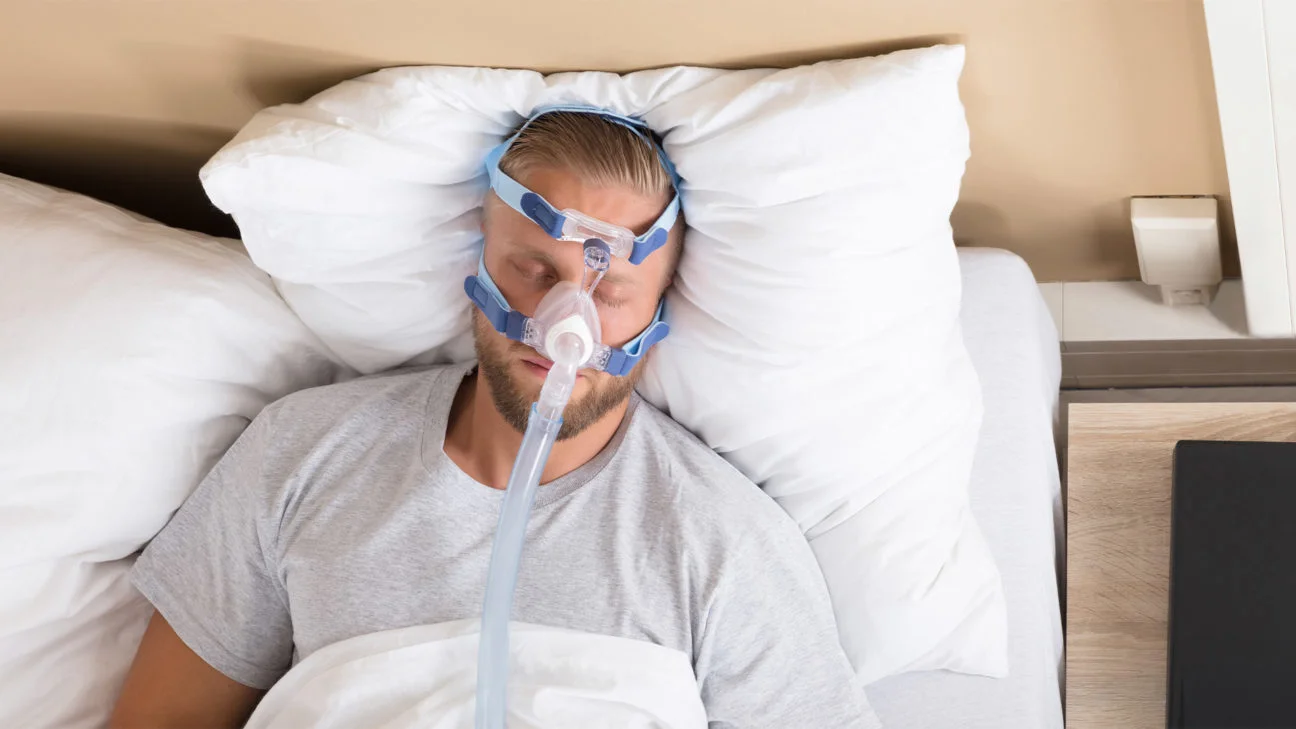
Managing sleep apnoea requires a delicate balance between effective therapy and overall patient safety. For years, magnetic clips have been a popular feature in CPAP mask design, praised for their “click-and-go” convenience. However, recent global safety alerts from health regulators, including the Therapeutic Goods Administration (TGA) in Australia and the FDA, have cast a spotlight on the potential risks these magnets pose to patients with certain medical implants.
Non-magnetic CPAP masks have emerged as the primary solution for those needing to avoid magnetic interference. If you or your bed partner have a pacemaker, shunt, or any metallic implant, switching to a non-magnetic interface is no longer just a matter of preference—it is a critical safety requirement.
This guide provides a comprehensive overview of why non-magnetic masks are essential, which devices are at risk, and how to select the best non-magnetic options available in Australia today.
See more: Best Oxygen Concentrator Guide: Melbourne Medical Oxygen
What is a Non-Magnetic CPAP Mask?
A non-magnetic CPAP mask is a sleep apnoea interface that utilizes traditional plastic clips, hooks, or Velcro fasteners instead of magnetic attachments to secure the headgear to the mask frame.
While the therapy delivered—Continuous Positive Airway Pressure—remains identical, the hardware is stripped of any ferromagnetic materials. This ensures that no static magnetic field is generated near the face, neck, or chest, where sensitive medical implants are often located.
Why the Shift Toward Non-Magnetic Options?
In late 2023 and early 2024, major manufacturers issued “Product Defect Corrections” following reports of magnetic interference. These magnets, often found in the lower headgear clips, can exert a field strength of up to 400mT. At this level, they can inadvertently shift the settings of a programmable valve or disrupt the electronic rhythm of a cardiac device if they come within 150mm (6 inches) of the implant.
The Science of Risk: How Magnets Affect Implants
Understanding the interaction between magnets and medical devices is vital for long-term safety. Most modern implants are “active,” meaning they rely on electrical sensors or magnetic switches to function.
1. Cardiac Interference (Pacemakers & ICDs)
Pacemakers and Implantable Cardioverter Defibrillators (ICDs) often have a “magnet mode.” This is a safety feature used by doctors to temporarily inhibit or change the device’s rhythm during surgery. If a CPAP mask magnet accidentally triggers this mode during sleep, it could lead to an irregular heartbeat or the failure of the device to deliver a life-saving shock.
2. Neurological Risks (CSF Shunts)
Many patients with hydrocephalus use a Cerebrospinal Fluid (CSF) shunt to drain excess fluid from the brain. These shunts often have programmable valves that are adjusted using external magnets. A CPAP mask magnet positioned too close to the head can accidentally change the pressure setting of the valve, leading to under-drainage or over-drainage of fluid, which requires surgical intervention to correct.
3. Ferromagnetic Displacement
Even non-electronic implants, such as aneurysm clips, metallic stents, or ocular implants, can be affected. If these contain ferromagnetic materials, the magnetic field can exert a physical pull on the device, potentially dislodging it from its intended position.
Critical Safety Checklist: Who Should Switch?
According to TGA guidelines, you must use a non-magnetic CPAP mask if you—or anyone in close physical contact (such as a bed partner)—have any of the following:
| Category | High-Risk Medical Implants |
| Cardiac | Pacemakers, Implantable Cardioverter Defibrillators (ICD) |
| Neurological | CSF Shunts (e.g., Ventriculo-peritoneal shunts), Neurostimulators |
| Audiology | Cochlear implants, Bone-anchored hearing aids |
| Surgical | Aneurysm clips, Embolic coils, Metallic stents/valves |
| Other | Insulin pumps, Ocular implants, Metallic splinters in the eye |
Pro Tip: If you are unsure whether your implant is “MR-Safe” or contains ferromagnetic material, consult your specialist before using a mask with magnets.
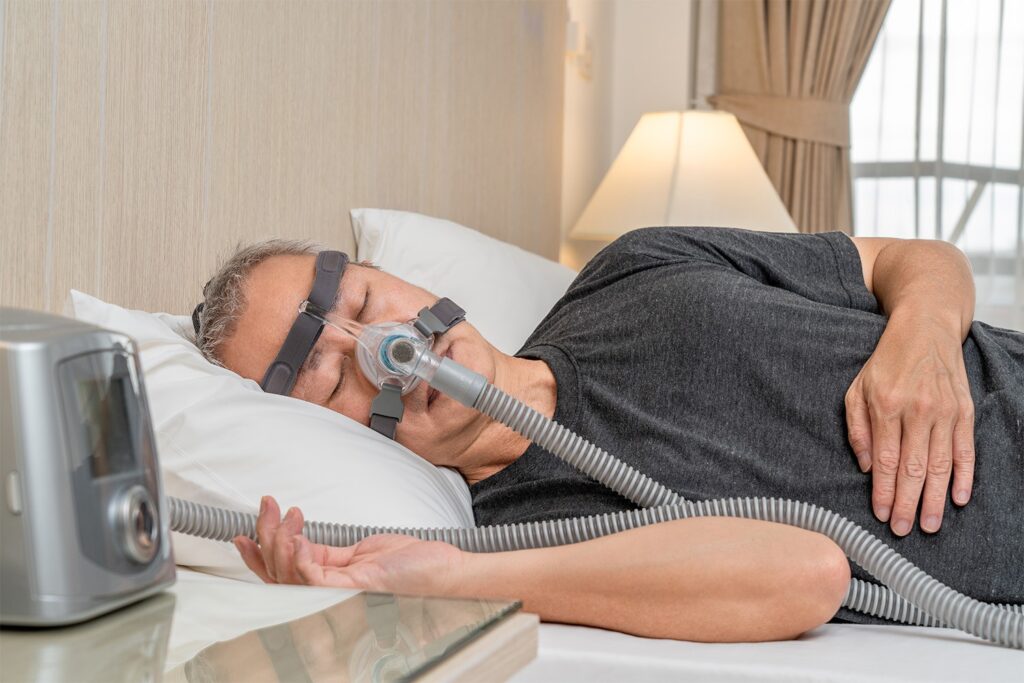
Benefits of Choosing Non-Magnetic Interfaces
Beyond the obvious safety advantages, non-magnetic masks offer several benefits for Australian patients:
- Universal Compatibility: Non-magnetic versions of popular masks (like the ResMed AirFit F20 Non-Magnetic) maintain the same high-quality seal and comfort as their magnetic counterparts.
- Travel Security: You don’t have to worry about magnetic interference with airport security scanners or other sensitive electronics while traveling.
- Peace of Mind: Eliminating the “150mm safe distance” rule allows for unrestricted movement during sleep and closer proximity to partners.
- Compliance with Healthcare Standards: Many Australian hospitals and sleep clinics are transitioning exclusively to non-magnetic equipment to minimize liability and patient risk.
Best Practices for Transitioning to a Non-Magnetic Mask
If you have been identified as a candidate for a non-magnetic switch, follow this structured framework to ensure your therapy remains effective.
Step 1: Identify Your Current Equipment
Check your current headgear. If it features small, hard circular clips that “snap” together via a magnet, it is a magnetic model. ResMed models like the AirFit F20, F30, and N20 are commonly equipped with magnets unless specified as “Non-Magnetic.”
Step 2: Choose a Comparable Replacement
You don’t necessarily have to change your entire mask setup. Manufacturers have released non-magnetic headgear and clips that are compatible with existing mask frames.
- ResMed Users: Look for the specific “Non-Magnetic” variants of the AirFit series.
- Fisher & Paykel Users: Most F&P masks, such as the Vitera or Evora, are inherently non-magnetic as they use hook-and-loop or plastic clip systems.
Step 3: Verify the Fit
Since non-magnetic clips may require a slightly different physical action to attach (such as a sliding hook), ensure you can comfortably operate them, especially if you have arthritis or limited dexterity.
Step 4: Update Your Care Plan
Notify your sleep physician or GP about the change. This ensures your medical records reflect that you are using safety-compliant equipment.
Common Mistakes to Avoid
- Ignoring the Bed Partner: Even if the CPAP user doesn’t have an implant, if their partner has a pacemaker, the user must switch to a non-magnetic mask. The 150mm safety zone is easily breached during a hug or while sleeping close together.
- Assuming All “Plastic” Clips are Safe: Some clips look like plastic but have a small magnet embedded inside. Always check the manufacturer’s packaging for the “Non-Magnetic” label.
- Delayed Replacement: Many patients wait until their next scheduled replacement cycle. Given the “Class I” nature of some recalls, the TGA recommends a timely replacement for contraindicated users.
FAQ: Non-Magnetic CPAP Masks in Australia
Q: Are non-magnetic masks less comfortable?
A: No. The cushions and frames are identical. The only difference is the method used to attach the headgear to the frame.
Q: Which ResMed masks are available in non-magnetic versions?
A: ResMed has released non-magnetic versions of the AirFit F20, AirTouch F20, and AirFit F30i specifically for the Australian market.
Q: Do I need a new prescription to change to a non-magnetic mask?
A: Generally, no. As long as the mask type (Full Face vs. Nasal) remains the same, you can swap to a non-magnetic version of the same model.
Q: How do I know if my mask has magnets?
A: If the clips “jump” toward each other or stick to a refrigerator door, they contain magnets. Non-magnetic clips will show no attraction to metal surfaces.
Q: Are Fisher & Paykel masks safe for pacemakers?
A: Yes. Most Fisher & Paykel masks (like the Evora and Simplus) do not use magnets in their headgear, making them a “safe-by-design” alternative.
Conclusion: Prioritising Safety in Sleep Apnoea Care
The transition to non-magnetic CPAP masks is a vital step in modernizing patient safety within the Australian sleep health landscape. While magnets provided a minor convenience, the potential risks to life-critical implants like pacemakers and shunts far outweigh the benefits of a quick-release clip.
By choosing a non-magnetic interface, you ensure that your sleep apnoea treatment remains a tool for health rather than a source of hidden risk. Always stay informed by checking the latest TGA safety alerts and consulting with your healthcare provider to ensure your equipment is fully compatible with your medical history.
Would you like me to provide a list of TGA-approved non-magnetic CPAP mask models currently available in Australia?
Internal Linking Suggestions:
- Anchor: “CPAP mask types” (Link to a general guide on nasal vs. full-face masks)
- Anchor: “sleep apnoea treatment” (Link to a page about CPAP machine maintenance)
External Reference Suggestions:
- Therapeutic Goods Administration (TGA) Safety Alerts
- Australasian Sleep Association (ASA) Patient Guidelines